
Elite Speed. Real Results.

Parent and Athlete Guide

This guide is designed to prepare our athletes and families on what to expect whether it's practice or a meet. Here I will walk you through everything you'll need to know for indoor and outdoor competitions as well as practices as well.

image of outdoor activities showcasing athletic shoes

Indoor Track Experience

Months : October thru February

Register
Posted: April 18th, 2026

Key Points

  • Indoor meets take place on either a 200m flat track, 300m flat track or a 200m banked track; there are no 400m tracks like outdoor.
  • There are usually small bleachers that parents can sit on unless you want to bring lawn chairs instead because it can get crowded at times
  • The 60m dash and 60m hurdles are substitute events for the outdoor 100m dash and 100m hurdles; weight throw subs for the discus throw
  • Indoor is about athletes finding their identity and footing while also having fun; athletes should strive to improve in areas that can help for the spring

Description

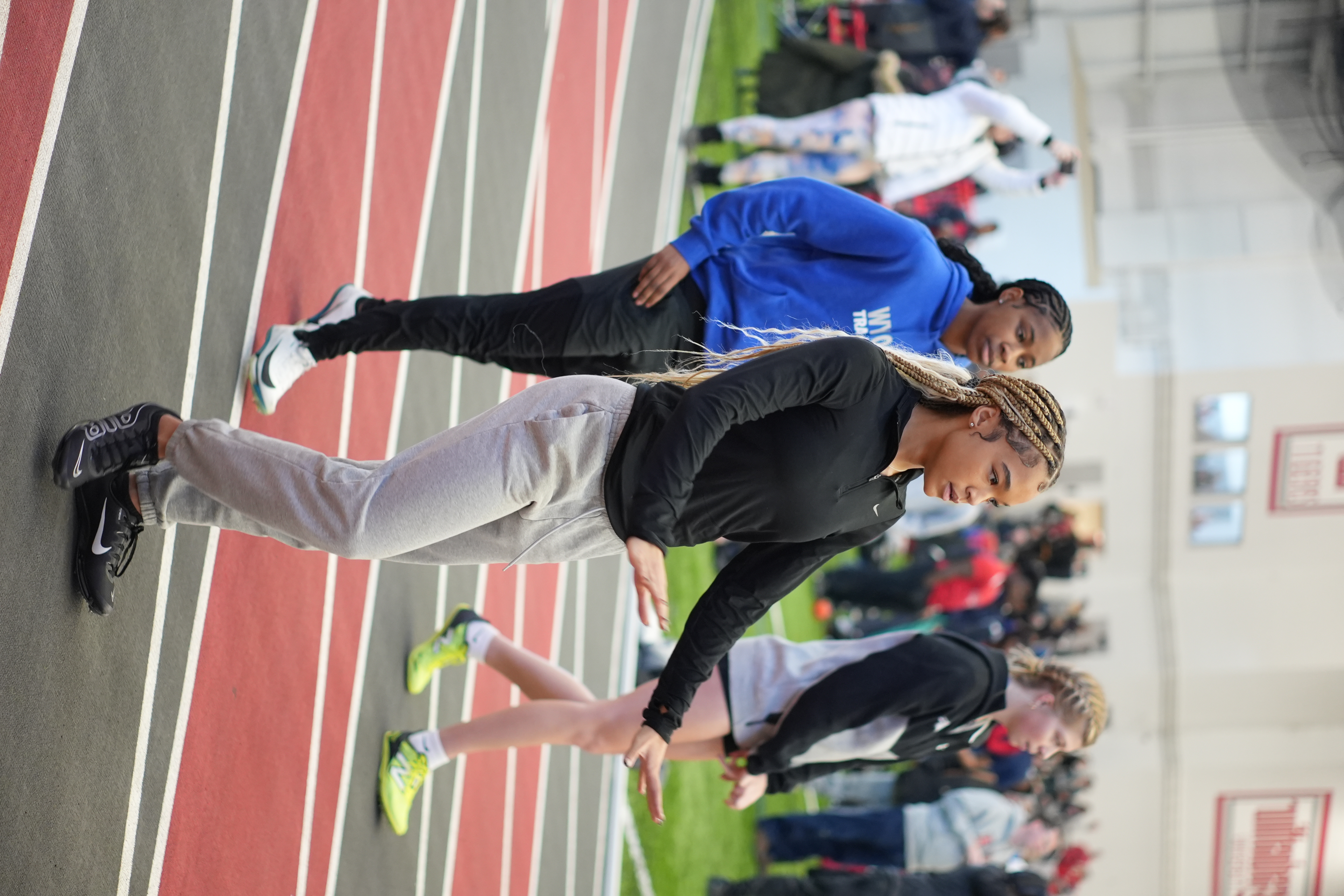
The TruSpeed Athletics indoor program is one of the premier points of the club itself. We strive during that season in helping athletes better prepare for their spring outdoor season with their school. Indoor training will take place 3-4 days per week either on a indoor track or outside at an outdoor track. Meets are generally on the weekends, so either a Saturday or a Sunday we could have a meet. Those aiming to qualify for indoor state do have the option to train with us and still run certain meets under their school name in order to hit qualifying standards. We also give athletes numerous exposure opportunities, getting the chance to compete at the state and national level. Some out of town meets that we may attend are in Geneva, OH, Chicago, IL, Ann Arbor, MI, Virginia Beach, VA, Boston, MA, Louisville, KY and New York City, NY. We do not go to all of these cities but it gives you a general idea of some that we may go to. Athletes should always be warming up 35-45 minutes before the start of their event. While warming up it's mandatory that athletes wear proper warm-up attire such as a t-shirt or jacket and sweatpants. Competition starts in December and ends generally in the February/March area. Indoor track meets can last anywhere from 4-8 hours so it's definitely essential that athletes bring snacks and things to do in the meantime. Athletes can choose to compete in anything from 1-4 events at a meet and unlike the spring school season may pick and choose what events they would like to run. (Coaches suggestions may occur as well)

  • Collaborate Across Teams
    Work with coaches and staff to understand needs and deliver solutions.
  • Champion Continuous Improvement
    Gather feedback and iterate on designs for continuous improvement.

Order of Events

Most indoor meets follow the same if not similar order of events and those go as follows :

60m Hurdle Prelims (Top 8 or 16 advance to finals)

60m Dash Prelims (Top 8 or 16 advance to finals)

4x800m Relay

60m Hurdle Finals

60m Dash Finals

4x200m Relay

1600m Run

400m Dash

800m Run

200m Dash

3200m Run

4x400m Relay

Other events contested at some indoor meets : 55m Hurdles, 55m Dash, 300m Dash, 500m Dash, 600m Run, 1000m Run, Mile, 2 Mile, 5K

Field Events (no order) : High Jump, Long Jump, Pole Vault, Shot Put, Weight Throw, Triple Jump

Steps to Success (Indoor Edition)

  1. Step 1: Discipline
    Learn how and when to warm-up and prep yourself for competition; getting quality rest at night is key
  2. Step 2: Explore Yourself
    Feel free to be open minded and explore new events or run some out of your comfort zone with an end goal in mind
  3. Step 3: Confidence is Key
    Winter season everyone starts fresh; use that to your advantage and compete like you belong there

Outdoor Track Experience

Months : May thru August

Register
Posted: April 25th, 2026

Key Points

  • Outdoor summer track meets usually take place on a Saturday or Sunday with first events starting in the morning on that day
  • Athletes compete against their designated age group. Their age group is whatever age they will be on December 31st of this year.
  • Events not contested at normal summer meets except regionals and JO's are the Steeplechase and Multi events (Pent, Hept and Decathlon)
  • Outdoor season can be taxing at times and create mental exhaustion with it being after spring season; Here you are training your mentality more than anything so never get discouraged at times when PR's aren't consistent.

Description

The TruSpeed Athletics Summer program provides athletes of all track abilities to learn more and develop within the sport. For youth athletes, they are normally learning about events and learning running techniques and cues. High school athletes are either getting integrated into our training program or racing for a chance to compete at the AAU or USATF Junior Olympics. The warm up timing is different and hard to gauge unless you've been to an event several times. Meets can run anywhere from 7 to 8 hours in a day so the goal is to keep the athletes hydrated and engaged at meets. Once an athlete is done with their events they can freely leave or even leave in between and come back as well. That's where the mental battle happens most with transitioning from high school track to summer track. Normally event line-ups will be sent out a day or two before the meet along with a desired arrival time for athletes to show up. There will be a team tent set up where athletes can camp out under and chill between events. Parents if you want to bring your own lawn chair for you or your athlete that is perfectly fine! If any parents want to gather together to get a snack basket and cooler for the athletes for these meets that would honestly be great. I know some teams even host like a hospitality table for the athletes to stay fueled. Athletes should always be properly dressed in warm up attire which can even be a T-shirt and sweat pants over their uniform. This trains them to learn how to prepare themselves for competition on a regular basis and creates self discipline. Athletes and parents wanting to run or qualify for Junior Olympics should enter their name under "Junior Olympics" on the meet sheet so it indicates to me that you intend to compete past regionals. Athletes 13 and older may compete in up to 4 events in a meet while 12 and under can only compete in 3 max. Advancement to Junior Olympics looks like this : Districts (Top 16 advance to local regionals), Regionals (Top 5 advance to Junior Olympics) and Junior Olympics (Top 8 are crowned national All-Americans). If you have interest in a June national event like New Balance, Nike or Adidas those rules are very different and it's more structured like a high school track meet. Always feel free to contact a coach with any questions for anything and spread the word! The summertime is where athletes can take a leap in preparation for the following school year!

  • Entry Fee / Deadline
    Entry fees are usually around $15-25 per meet and are due one week prior to each event
  • Champion Continuous Improvement
    Gather feedback and iterate on designs for continuous improvement.

Order of Events

Most indoor meets follow the same if not similar order of events and those go as follows :

4x800m Relay (NO 8U, same age groups as 4x1) - most meets there are no 4x8 team so they skip directly to hurdles

200m Hurdles (Ages 14u)

400m Hurdles (Ages 15+)

3000m Run (Usually ran combined) - scored separately

100m Dash (can be ran youngest to oldest-usually; or oldest to youngest at times) - I'll let you always know day of meet

80m Hurdles (Ages 12u)

100m Hurdles / 110m Hurdles (Ages 13+)

1500m Run (Usually run Girls 14u, Girls 15+, Boys 14u, Boys 15+) - scored separately

4x100m Relay (8u, 9-10, 11-12, 13-14, 15-16, 17-18 are the competing age groups)

400m Dash (starting 8u to 17-18)

800m Run (race style similar to 1500m)

200m Dash (starting 8u to 17-18)

4x400m Relay (NO 8U, same age groups as 4x1)

1500m / 3000m Race Walk

Other events contested at some outdoor meets : Pentathlon, Heptathlon, Decathlon, 2000m Steeplechase

Field Events (no order) : High Jump, Long Jump, Pole Vault, Shot Put, Discus Throw, Triple Jump, Javelin

Steps to Success (Indoor Edition)

  1. Step 1: Discipline
    Learn how and when to warm-up and prep yourself for competition; getting quality rest at night is key
  2. Step 2: Explore Yourself
    Feel free to be open minded and explore new events or run some out of your comfort zone with an end goal in mind
  3. Step 3: Confidence is Key
    Winter season everyone starts fresh; use that to your advantage and compete like you belong there